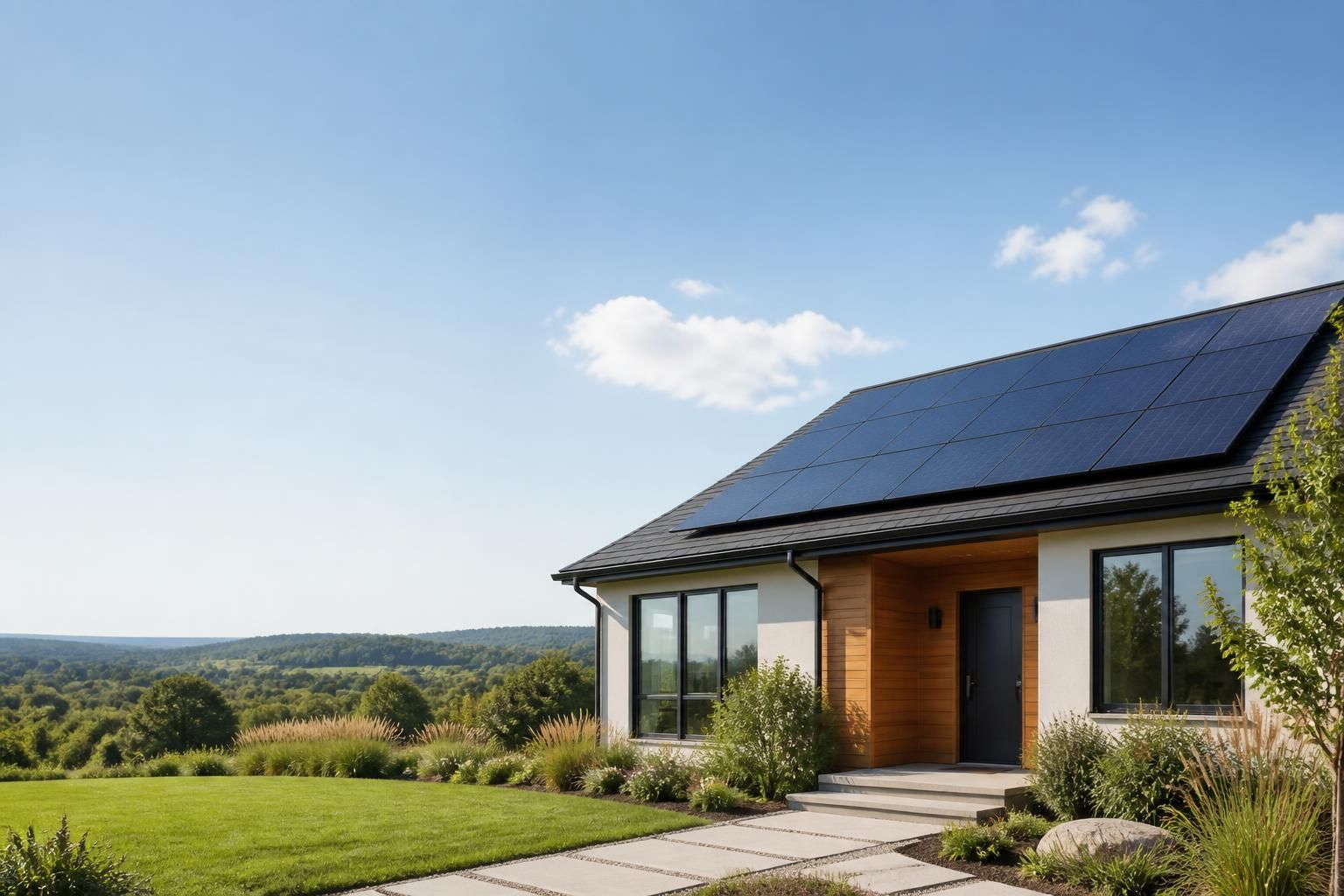
If your electric bill keeps rising or your home still relies too heavily on utility power, an energy savings consultation can show where the biggest opportunities are. Many homeowners want solar, but they are not sure whether their roof, usage patterns, or energy goals make the move worthwhile.
The American Solar Association helps homeowners in Orlando, Florida understand their options before they commit to a system. We review how your home uses energy, what solar and storage could do for your property, and which setup may make the most sense for your needs.
Start with your goals
An energy savings consultation should begin with what you want your home to do better. Some homeowners want to reduce monthly dependence on utility power. Others want backup support during outages. Many simply want a clearer picture of whether solar fits their roof and usage.
During the consultation, we look at the practical details that shape your options, including:
- Your household electricity use
- Roof space and available mounting areas
- Shading and exposure considerations
- Whether rooftop or ground-mounted solar may fit the property
- Battery backup or storage goals
- Utility programs, incentives, and financing structures that may affect the project
This first step helps turn a general interest in solar into a plan that fits the property instead of a packaged solution that may not suit it.
What we review
Every home uses energy differently, so the consultation focuses on the details that matter for decision-making. We review the factors that can influence system design, performance expectations, and whether solar is a strong match for your home.
Usage patterns
We discuss how your household uses electricity across the day and across the year. That helps identify whether your energy needs are steady, concentrated, or driven by specific appliances and habits.
Property fit
Roof layout, usable space, and mounting options all affect what can be installed. If rooftop solar is not the right fit, ground-mounted options may be part of the discussion.
Storage needs
Some homes benefit from battery backup because it can store solar energy for later use. Others may want storage mainly to support resilience during power interruptions or to make better use of energy their system produces.
How the consultation works
An energy savings consultation should leave you with clearer next steps, not more confusion. The process is straightforward and centered on your property, your usage, and your goals.
- Initial conversation
We talk about what you want to change, whether that means lowering reliance on utility power, exploring storage, or simply checking if solar makes sense.
- Property review
We look at roof conditions, available space, shade considerations, and any property details that influence system design.
- Energy assessment
We review your current energy use and discuss how solar production and storage may align with it.
- Options discussion
We explain solar panel, battery storage, monitoring, and design choices that may fit the home.
- Next-step planning
If solar appears to be a fit, we outline the path forward through design, permitting, installation, inspection, and activation.
That structure helps you understand not just whether solar is possible, but how the project would move from idea to installed system.
Solar savings factors
Energy savings depend on more than panel count. A useful consultation looks at the things that shape how much value a solar setup may deliver over time.
- Roof space - The amount of available area influences system size and placement.
- Shading - Shade can affect production and may shape panel layout.
- Utility rates - Your rate structure helps determine how solar may impact bills.
- Household habits - When your home uses power can matter as much as how much it uses.
- Equipment choices - Panels, inverters, and storage options can change system behavior.
- Energy goals - Lower bills, greater resilience, and reduced grid dependence may call for different configurations.
We use those factors to explain what matters most for your home rather than treating every property the same.
Battery storage options
For many homeowners, energy savings and energy resilience go hand in hand. Battery storage can help store energy produced by a solar system so it can be used later, including at times when the home may want more independence from the grid.
Storage can be useful when you want to:
- Keep more of the energy your solar system produces
- Support backup power goals during outages
- Manage household energy use more strategically
- Create a setup that matches your priorities for comfort and control
Battery backup is not one-size-fits-all. Equipment and configuration vary by property and program, so the consultation is the place to sort through what is realistic for your home.
Orlando home fit
Homes across Orlando, Florida and surrounding Central Florida communities can have very different solar opportunities. Some properties may be strong candidates for rooftop systems, while others may need different mounting or design considerations. That is why the consultation starts with your property instead of a preset package.
The American Solar Association works with homeowners who want a clear answer to a few essential questions: Will solar fit this home? What kind of system makes sense? What role should storage play? How do financing structures, utility programs, and incentives affect the decision?
By reviewing those points early, we help homeowners make informed decisions before they commit to a design or installation path.
From review to activation
A consultation is only the first step, but it should prepare you for the full process if you decide to move ahead. When a project fits, the path typically includes system design and engineering, permitting, installation, inspection, and system activation.
That process also gives homeowners time to understand how the system will work day to day. We explain how solar panels, inverters, battery storage, utility programs, and household usage all interact so you can see the bigger picture, not just the hardware.
If your goal is to reduce dependence on traditional utility power, that clarity matters. It helps you compare options with a better sense of how they affect your home over time.
Common questions
What should I bring to my consultation?
It helps to have recent utility information, an idea of your energy goals, and any notes about roof or property features you already know about. If you have questions about storage or backup support, bring those too.
Can you help if I am still deciding about solar?
Yes. Many homeowners come to the consultation before they know whether solar is the right move. That is often the best time to review the facts and compare options.
Do you only review rooftop systems?
No. Rooftop solar is common, but ground-mounted options may also be discussed when property conditions suggest a different approach.
Will the consultation include battery storage options?
Yes. If storage is part of your goals, we can discuss battery backup and how it may fit with a solar system for your home.
Can you explain how financing and incentives affect the decision?
Yes. Part of the consultation is helping homeowners understand available financing structures, incentives, and utility programs that may influence the economics of going solar.
Is this service only for Orlando homeowners?
The focus is Orlando, Florida, but we also work with homeowners throughout surrounding Central Florida communities, including Winter Park, Kissimmee, Sanford, Altamonte Springs, Apopka, Lake Mary, Oviedo, Clermont, Ocoee, Winter Springs, St. Cloud, and Winter Garden.
Talk with us
If you are trying to figure out whether solar can lower your utility dependence or make your home more resilient, an energy savings consultation is a practical place to start. The American Solar Association can walk you through the choices, explain what your property may support, and help you understand whether a residential solar and storage plan fits your goals.
For homeowners in Orlando, Florida, the next step is simple: contact us to discuss your home, your energy use, and the options that may make sense for your property.
 Google Reviews